8 Comprehensive Courses — 300+ Happy Students Worldwide

Online Quran Courses for All Ages

One-on-one Quran and Arabic classes with certified teachers — designed to make your child love learning Quran, not feel forced. Simple, structured, and truly meaningful for the whole family.

Our Online Quran & Arabic Courses

From the very first Arabic letter to Hifz memorisation — every course is taught one-on-one by a certified, Ijazah-holding teacher. We teach in simple, easy English so that every student truly understands — not just reads. Our goal is simple: help your child fall in love with the Quran for life.

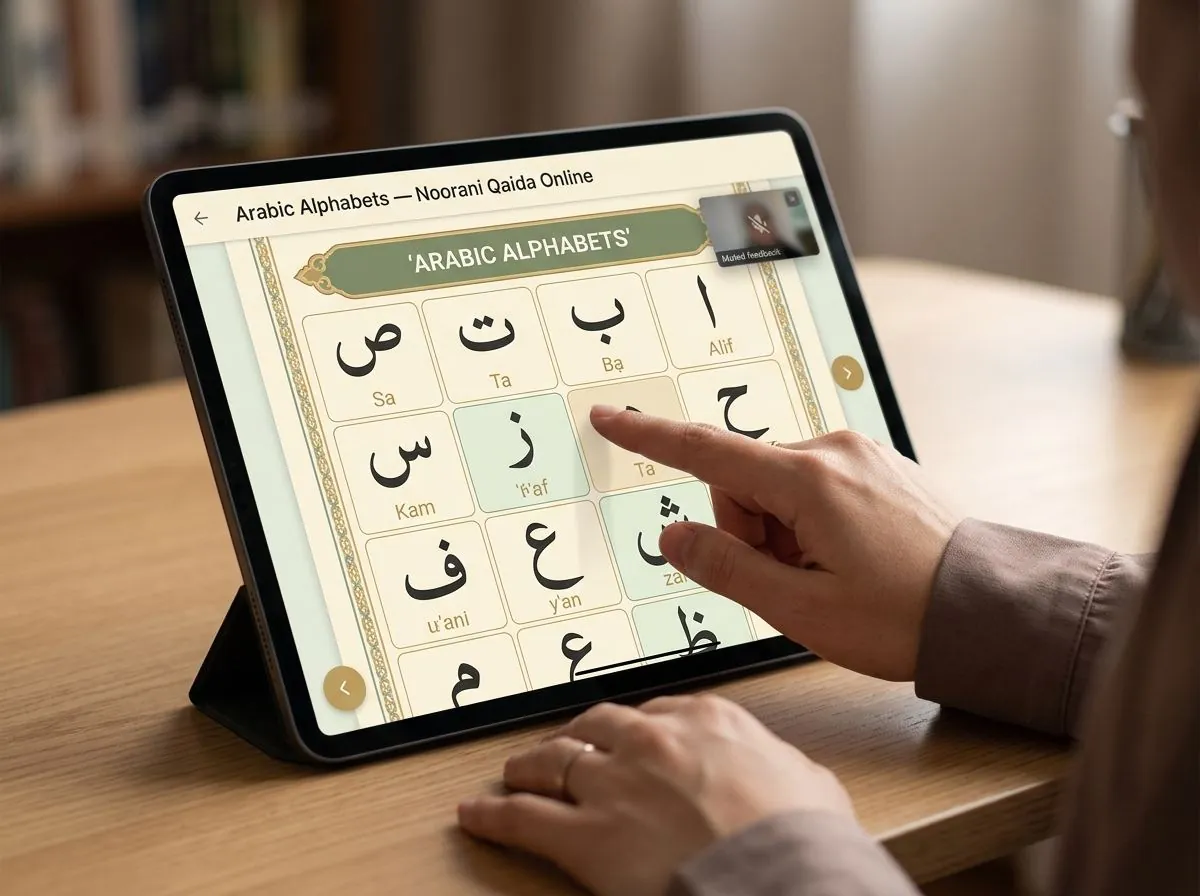
Young student learning Arabic alphabets online with a certified teacher
Beginner

Arabic Alphabets — Noorani Qaida Online

Perfect starting point for children from age 4 and adult beginners alike

Every journey with the Quran begins with one letter. Noorani Qaida is the gentle, proven first step — teaching all 28 Arabic letters (حروف هجاء), their shapes, sounds, and correct Makharij (articulation points). We make each lesson fun, visual, and encouraging, so children feel proud of every small achievement. Parents tell us their children are excited to show what they've learnt.

  • All 28 Arabic letters — recognition, writing & pronunciation
  • Makharij al-Huruf — correct articulation, taught step by step
  • Harakat — Fatha, Kasra, Damma, Tanween, Sukoon & Shaddah
  • Letter joining & word formation — reading full Arabic words
  • Suitable for children from age 4 and adults with no Arabic background
  • Recommended: 5 classes per week for fastest progress
View Pricing
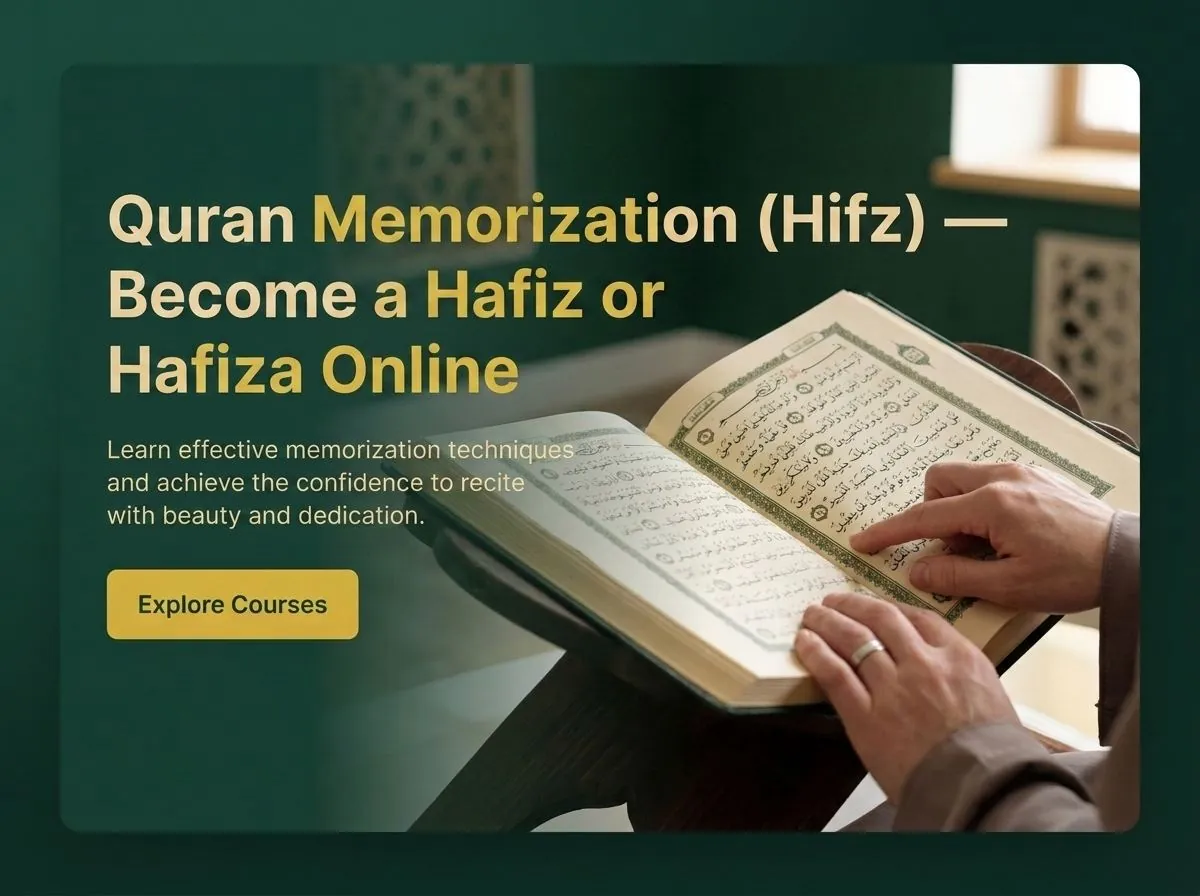
Student memorizing Quran with a certified Hafiz teacher online
Advanced

Quran Memorization (Hifz) — Become a Hafiz or Hafiza Online

One of the greatest honours in Islam — achievable from anywhere in the world

Imagine your child's name being called as a Hafiz or Hafiza of the entire Holy Quran. This dream is completely achievable online. Our structured Hifz program uses the proven Sabaq, Sabqi, and Manzil system — the same method used in traditional Madrasas for centuries — combined with the patience and personalised attention of one-on-one teaching. We support both the student and the parents every step of this blessed journey.

  • Structured Sabaq, Sabqi & Manzil daily revision system
  • Expert Huffaz teachers — Ijazah certified with years of experience
  • Personalised memorisation plan tailored to student's pace
  • Long-term retention strategies to prevent forgetting
  • Suitable for children and adults — any starting age
  • Recommended: 5 days per week for consistent retention
View Pricing
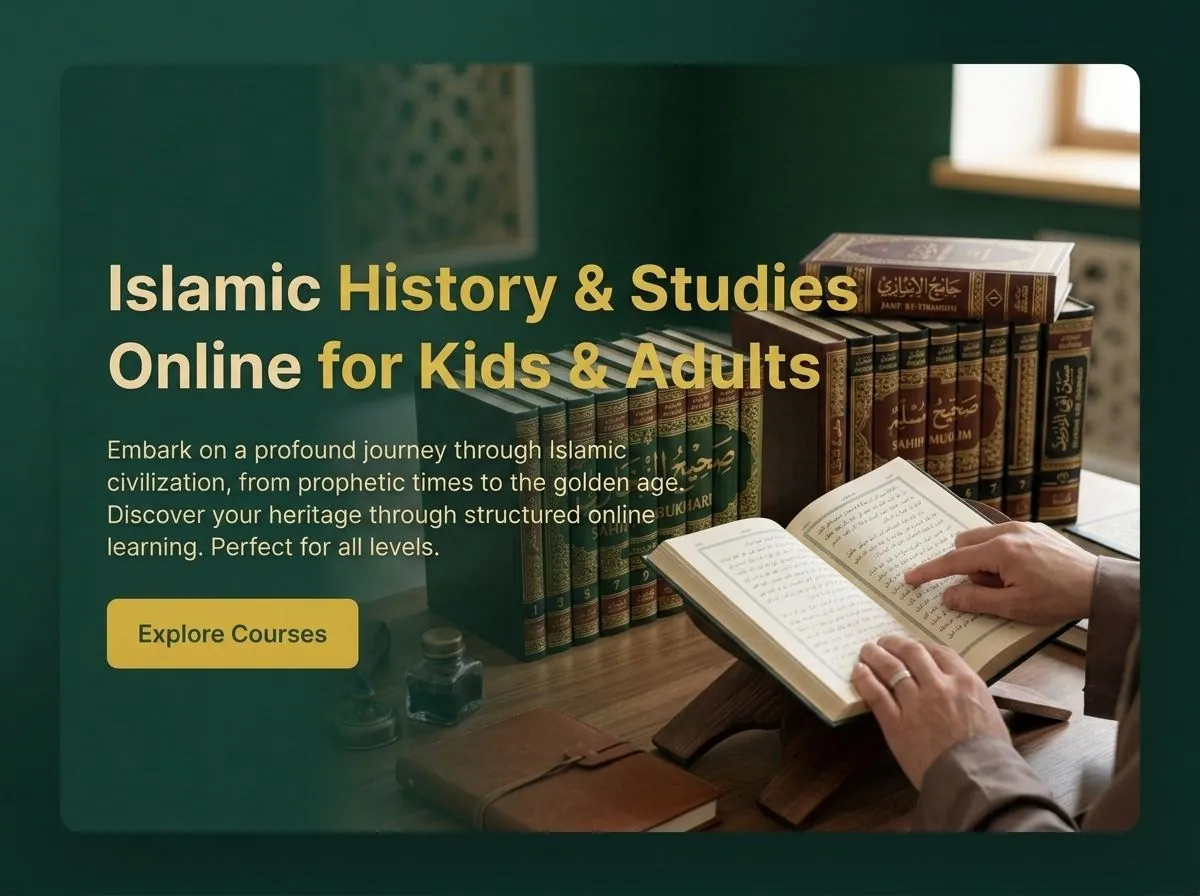
Student engaged in Islamic Studies class online
Knowledge

Islamic History & Studies — Online for Kids & Adults

Stories, characters, and values that stay with children for life

Islam is not just rules — it is a living, breathing story of love, courage, and purpose. Our Islamic Studies course brings this story to life through the Seerah of Prophet Muhammad ﷺ, the inspiring lives of the Prophets and Sahaba, and the practical teachings of Islam. We teach in a way that makes children ask questions, feel proud of their identity, and want to learn more — not because they have to, but because they genuinely love it.

  • Seerah of Prophet Muhammad ﷺ — life, character & legacy
  • Stories of Prophets & companions (Sahaba) — engaging & relatable
  • Pillars of Islam, Iman & Ihsan — core beliefs explained simply
  • Basic Fiqh — prayer, fasting, purification, halal & haram
  • Fun, interactive delivery for children from age 5
View Pricing
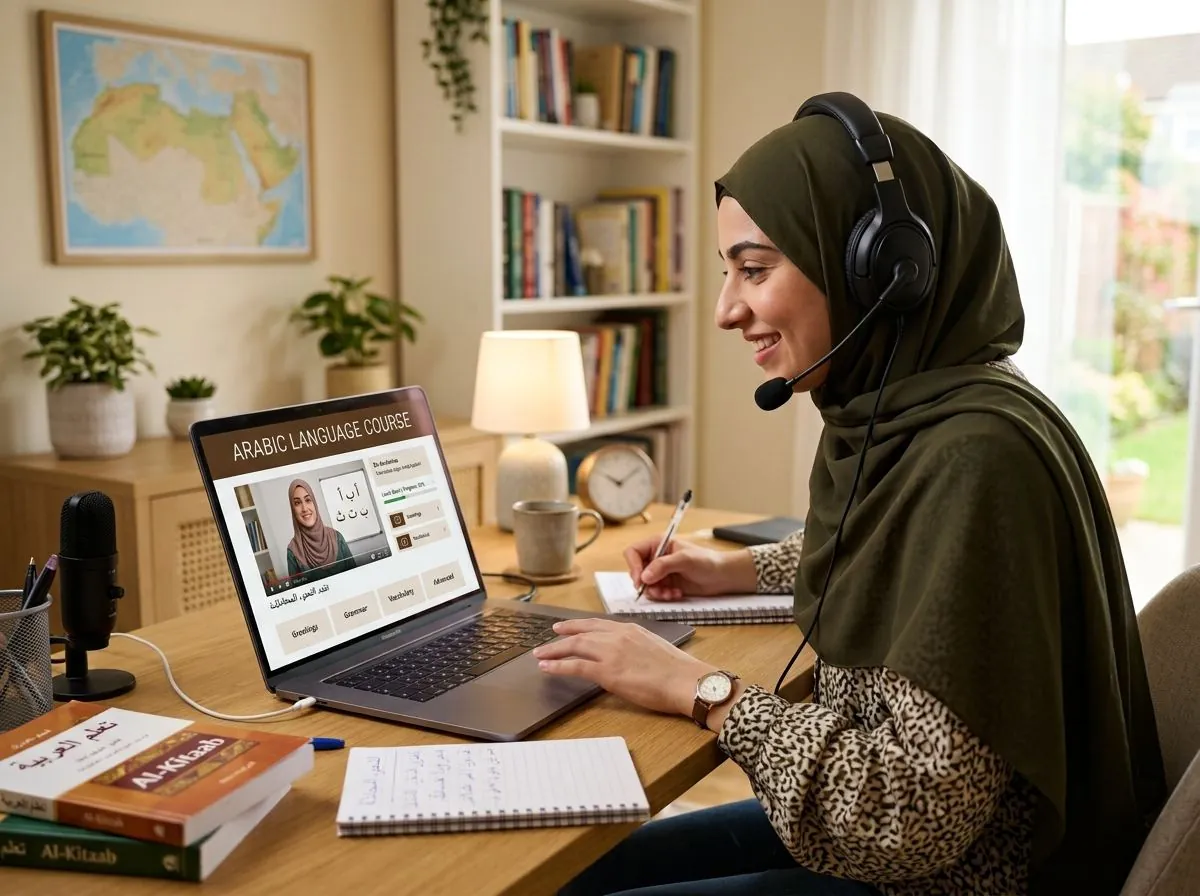
Adult student learning Arabic language online with a qualified teacher
Comprehensive

Arabic Language Course Online — Basic to Advanced

Understand the Quran directly in Arabic — without needing a translation

Arabic is the language Allah chose to reveal His final message. When you understand Arabic, the Quran comes alive in a completely different way — you hear Allah's words and understand them directly, in Salah, in your heart. Our Arabic course is structured from complete beginner to advanced, covering grammar (Nahw), morphology (Sarf), vocabulary, and conversational Arabic — all explained in simple English for non-native speakers.

  • Arabic grammar — Nahw (syntax) & Sarf (morphology) in plain English
  • Quranic Arabic — understand the Quran without relying on translation
  • Reading, writing & conversational Arabic skills
  • Structured curriculum from absolute beginner to advanced level
  • Tailored for non-native Arabic speakers — UK, USA, Canada & worldwide
View Pricing
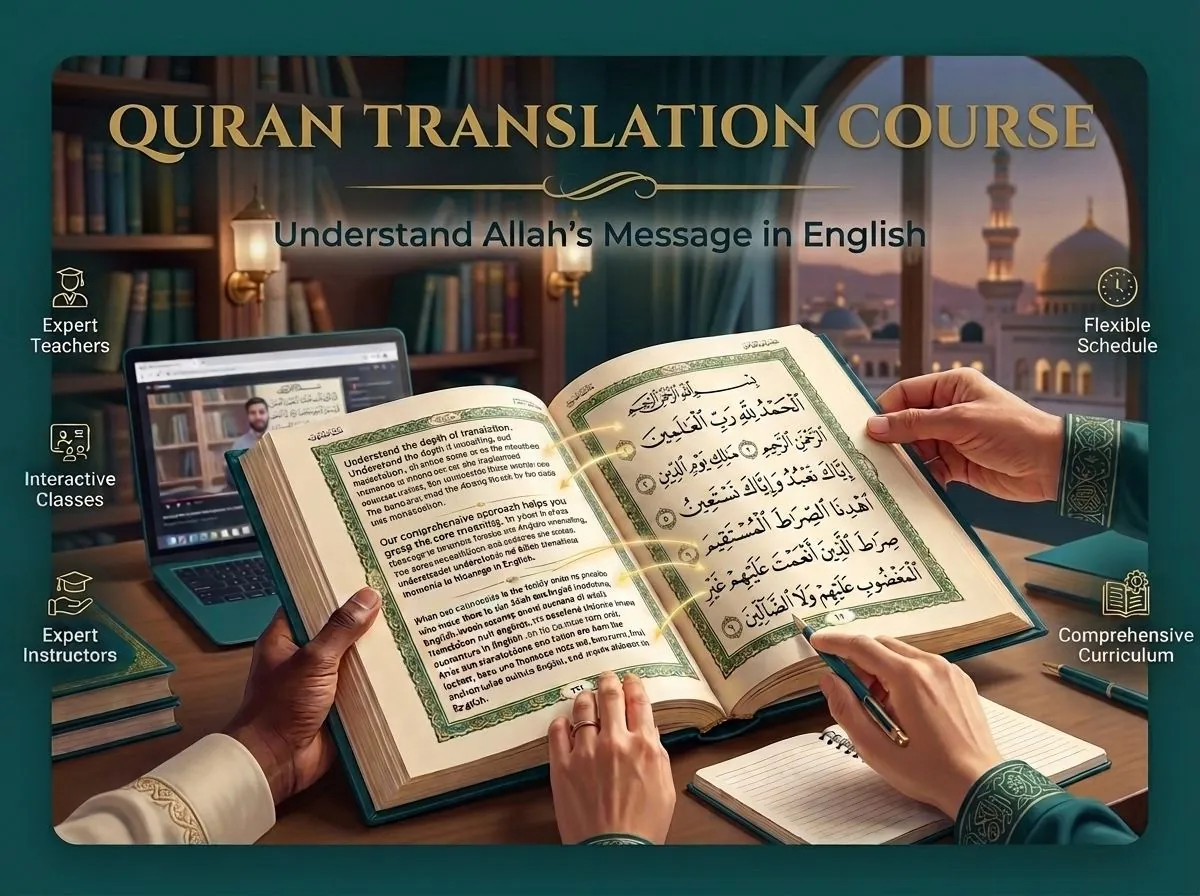
Student studying Quran translation and meanings online
Understanding

Quran Translation Course — Understand Allah's Message in English

Connect with the Quran's message on a personal, meaningful level

Many Muslims recite the Quran beautifully — but how many truly know what Allah is saying to them? This course changes that. We walk through the Quran verse by verse in English, exploring the reasons behind each revelation (Asbab al-Nuzul), key Arabic vocabulary, and the beautiful wisdom that applies directly to our everyday lives in the modern world. It is an emotional, transformative experience for every student.

  • Verse-by-verse English translation & clear explanation
  • Asbab al-Nuzul — the reasons and context behind each revelation
  • Quranic vocabulary & key Arabic word meanings
  • Thematic study — understand recurring Quranic concepts deeply
  • Practical lessons — applying the Quran's guidance to daily life
View Pricing
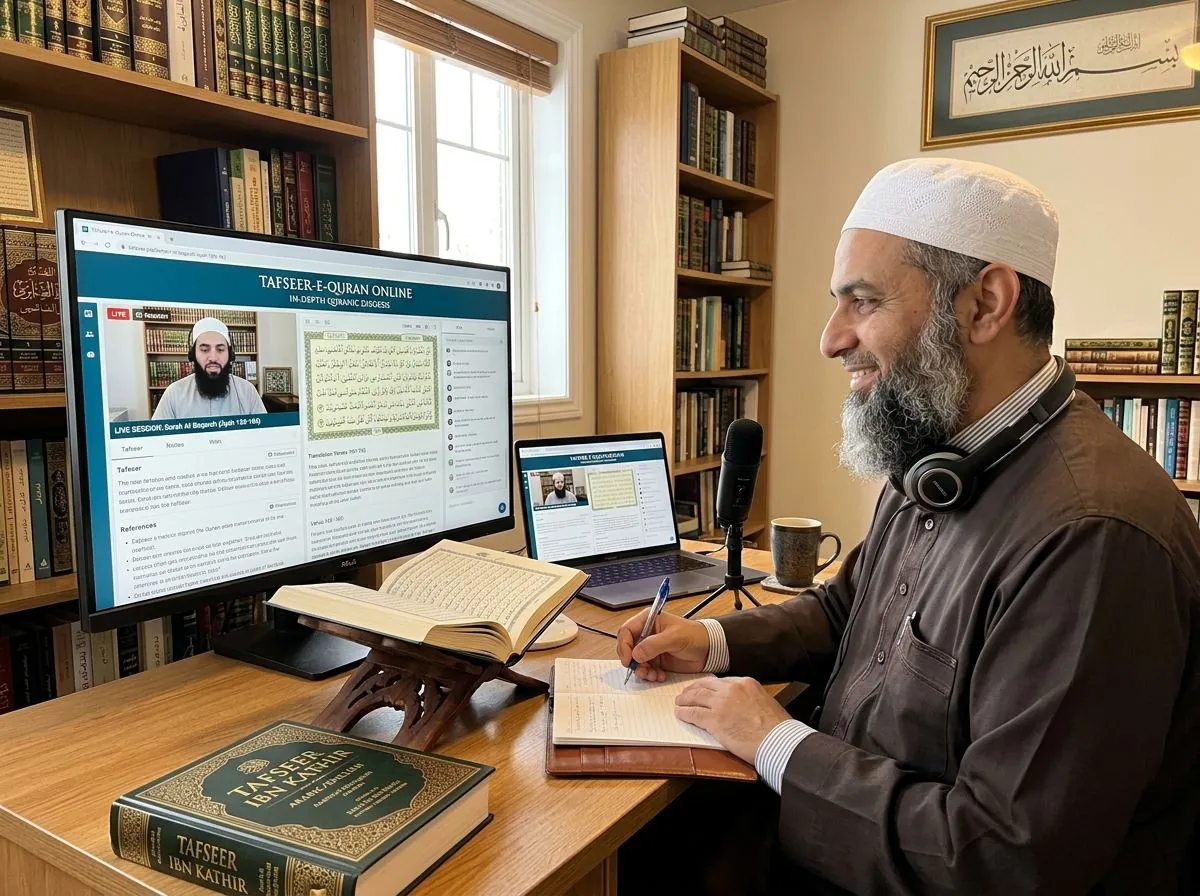
Student studying Tafseer-e-Quran in depth online
Deep Learning

Tafseer-e-Quran Online — In-Depth Quranic Exegesis

The deepest level of Quranic study — for those who want to truly know Allah's words

Tafseer (تفسير) is where the Quran truly opens up its treasures. Beyond reading, beyond translation — Tafseer takes you into the full depth of Allah's words: the linguistic brilliance of Arabic, the historical context, the scholarly wisdom accumulated over 1,400 years, and the timeless guidance for modern challenges. This course is for students who feel a deep pull to truly know what Allah is saying — and want that knowledge to change who they are.

  • Classical Tafseer — explanations from renowned Islamic scholars
  • Linguistic analysis — Arabic word meanings & nuances explored
  • Historical & contextual background of each Surah
  • Practical wisdom — applying Quranic guidance to modern life
  • Prerequisite: basic Quran reading ability recommended
View Pricing

Not sure which course is right for you?

Our advisors are available 24 hours a day, 7 days a week — in sha Allah, we will guide you to the perfect course for your level, age, and goals.

View Pricing & Packages
Chat with Us on WhatsApp

Questions About Our Courses

What is Noorani Qaida, and who should learn it?

Noorani Qaida is the foundational course that teaches the Arabic alphabet, correct pronunciation, and the basic rules of joining letters — before a student moves on to reading the Quran itself. It's recommended for every complete beginner, child or adult, since skipping it tends to produce readers who recognise patterns rather than pronounce letters correctly. See our complete guide to Noorani Qaida for what each stage covers.

Adults who cannot yet read Arabic accurately benefit from Noorani Qaida just as much as children — the letters and Tajweed foundations don't change with age. Adult students usually move through it faster than children since they can grasp the rules directly rather than needing them repeated through games and practice.

Once a student can confidently read joined letters with correct pronunciation, they typically move into Quran Recitation (Nazra) — reading directly from the Quran with the teacher — alongside deeper Tajweed rules. From there, students choose their own path: continuing recitation fluency, beginning Hifz (memorisation), or adding Arabic Language and Islamic Studies.

Can a complete beginner learn Tajweed, or do I need to read Quran fluently first?

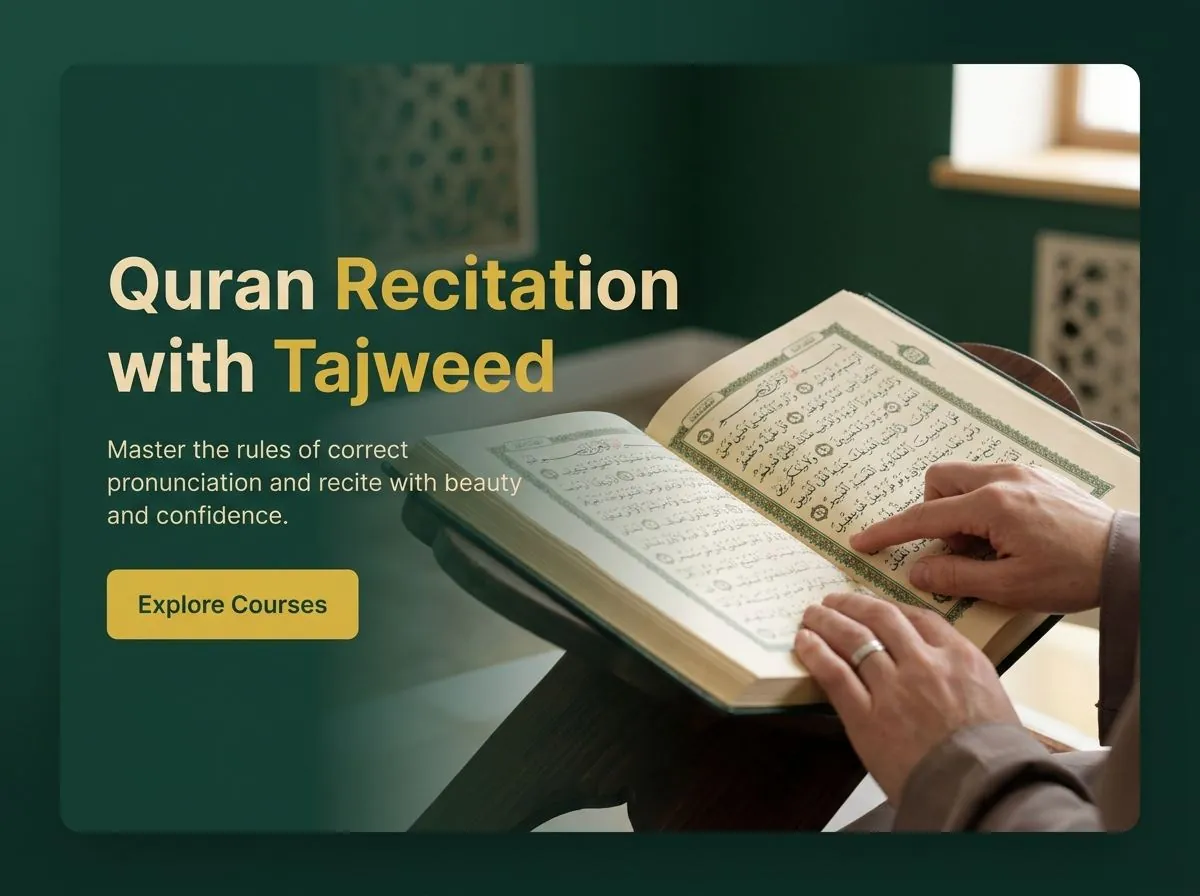
Complete beginners can learn Tajweed — in fact, the core rules are introduced from the very first Noorani Qaida lessons rather than added on afterward, so correct pronunciation habits form from day one instead of needing to be corrected later. Our Tajweed rules guide for beginners covers the basics in order.

The starting rules cover the correct articulation point (Makharij) of each letter, followed by Noon Sakinah and Tanween rules, then Qalqalah letters — these form the base that later, more detailed rules build on. See our guides on Makharij al-Huruf, Noon Sakinah and Tanween, and Qalqalah letters.

Recording yourself reciting a short passage and comparing it to your teacher's correction from the last lesson is one of the most effective home practices — it's easy to miss your own mistakes while reading live, but much easier to hear them played back. Daily short repetition of a single ayah until it feels natural also helps more than reading a full page once.

How much Quran should I memorise each day?

There's no single correct amount — it depends on available time and how quickly new material sticks for that student. Many students start with a few lines a day and adjust based on how well they can retain and recite what they memorised the previous week during revision. Our 30-day Quran memorisation plan shows a realistic sample structure for Juz Amma.

Memorised Quran fades without regular revision, so most Hifz teachers use a structured cycle — recent material (Sabaq), recently-completed material (Sabqi), and older material (Manzil) — reviewed on a rotating schedule rather than all at once. Our Hifz memorisation guide explains this Sabaq-Sabqi-Manzil system in full.

Yes, though it requires a realistic pace rather than an ambitious one. Working adults tend to succeed by memorising in small, consistent amounts (often early morning, before the day's demands begin) rather than trying to fit large sessions in irregularly. See our complete Hifz guide for how a working-adult schedule can realistically be structured.

What is Quranic Arabic, and is it different from everyday Arabic?

Quranic Arabic is classical Arabic — the grammar, vocabulary, and style used in the Quran itself, which differs noticeably from the modern spoken Arabic used in everyday conversation across Arab countries today. Someone fluent in modern spoken Arabic can still need dedicated study to fully follow classical Quranic grammar and vocabulary, and vice versa.

Not immediately — Quran Translation lets you begin understanding the meaning right away, while Arabic Language study (which takes longer to build fluency in) deepens that understanding further over time. Many students study both in parallel: translation for immediate meaning, Arabic for the ability to eventually engage with the text directly.

What is the difference between Quran Translation and Tafseer-e-Quran?

Quran Translation converts the words into another language as directly as possible. Tafseer-e-Quran goes further, explaining the context behind each verse — when and why it was revealed, and how it has traditionally been understood — giving a fuller picture than translation alone can provide. Most students study translation first, then move into Tafseer for the surahs or topics they want to understand more deeply.

Learning to recite the Quran correctly is the foundation, but understanding the guidance within it — and the history and context surrounding it — is what turns recitation into a living connection with the text. That's why Islamic History and Studies sits alongside recitation, Tajweed, and Hifz as one of our course offerings rather than being treated as a separate, optional extra.